The Anatomy of the Search: A Scientific Guide to Finding a Lost Pet

For any pet owner, the silence that follows a slipped collar, a broken screen, or an unlatched backyard gate is a visceral, agonizing terror. In a matter of seconds, a beloved family member is cast into an unfamiliar, potentially hostile environment. It is a crisis that triggers an immediate, overwhelming surge of panic. Yet, as search-and-rescue professionals and animal behaviorists will attest, the first twenty-four hours are critical, and success depends on replacing raw emotion with systematic, behavior-based action.
To find a missing pet, one must think less like a distressed owner and more like a tracker. Dogs and cats do not navigate the world through human logic; they are guided by ancient instincts of survival, territory, and sensory perception. Understanding these behavioral patterns is the key to executing a swift, successful recovery.
1. The Behavioral Divergence: Cats vs. Dogs
The very first step of a search depends entirely on the species of your missing companion. Feline and canine survival instincts are radically different, meaning a strategy that works for a dog will almost certainly fail for a cat.
The Threshold of Fear (Cats)
When an indoor cat escapes, they rarely run far. Instead, they experience a psychological state known as “displacement.” Terrified by the vastness of the outdoors, their immediate instinct is to seek the closest, darkest, and quietest hiding spot available—usually within a three-house radius of their escape point.
Once hidden under a porch, inside a deck, or behind a bush, a displaced cat will enter a silent “threshold of fear.” They will not meow, they will not answer your calls, and they will remain completely motionless even if you walk inches from their hiding spot. A feline search must be highly localized, slow, and conducted on hands and knees with a high-powered flashlight, searching every crevice within a 150-foot radius of your home.
The Traveling Instinct (Dogs)
Dogs, by contrast, are cursorial animals designed for distance. When a dog escapes, they often run out of excitement or panic. Once the initial adrenaline spike fades, they find themselves in unfamiliar territory and will begin traveling, frequently navigating with the wind at their back to catch incoming scent markers.
Unlike cats, dogs will cover significant distances quickly. A dog search must immediately expand to a one-to-three-mile radius. Rather than chasing a running dog—which triggers their flight reflex and causes them to run faster—handlers must use low, non-threatening postures, avoid direct eye contact, and use familiar treats or squeaky toys to coax them back.
2. Establishing Scent Stations
An animal’s primary window into the world is their olfactory system. A dog possesses up to 300 million scent receptors, compared to a human’s measly 5 million. We must leverage this sensory superpower to guide them home.
Create a “scent station” at the point of escape. Place an unwashed item of your clothing (such as a worn t-shirt), your pet’s favorite bed, or their used litter box (for cats) outside. The familiar scent particles will drift on the wind, acting as an invisible lighthouse. In many cases, lost pets who are wandering nearby will catch these familiar scent markers overnight and return to the doorstep on their own.
To execute a thorough physical search, especially during the twilight hours when animals are most active, having professional-grade tools is essential. Utilizing a high-powered, adjustable-beam tactical flashlight (Professional High-Lumen Tactical Search Flashlight) is critical for catching the tapetum lucidum—the reflective membrane in a pet’s eyes—hidden in dark crawlspaces.
3. The Digital Dragnet
While physical searching is paramount, localizing community awareness is what closes the gap. The moment a pet is confirmed missing, you must mobilize a digital search network.
Submit your pet’s detailed description and location to established national databases such as PawBoost, which broadcasts alerts to thousands of local pet lovers and shelter networks in your region. Additionally, search for and join regional “Lost and Found Pets” Facebook groups specific to your city or county. These digital communities act as highly active neighborhood watches, allowing local residents to share sightings and monitor stray intakes in real-time.
4. The Animal Republic Community Search-Optimized Board
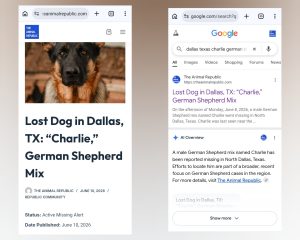
While general databases are helpful, they are often crowded, and individual posts can quickly become lost in social media feeds. At The Animal Republic, we believe in utilizing the full power of search engine indexing to bring missing pets home. If you are a resident in the Texas area, we can build a dedicated, search-optimized web page exclusively for your missing pet.
By collecting your data through our secure Lost & Found Submission Google Form, our team will manually construct a highly tailored landing page. This page is built using advanced technical schema and localized keywords designed to rank highly on Google search results within your specific Texas neighborhood.
5. The Art of the High-Contrast Flyer
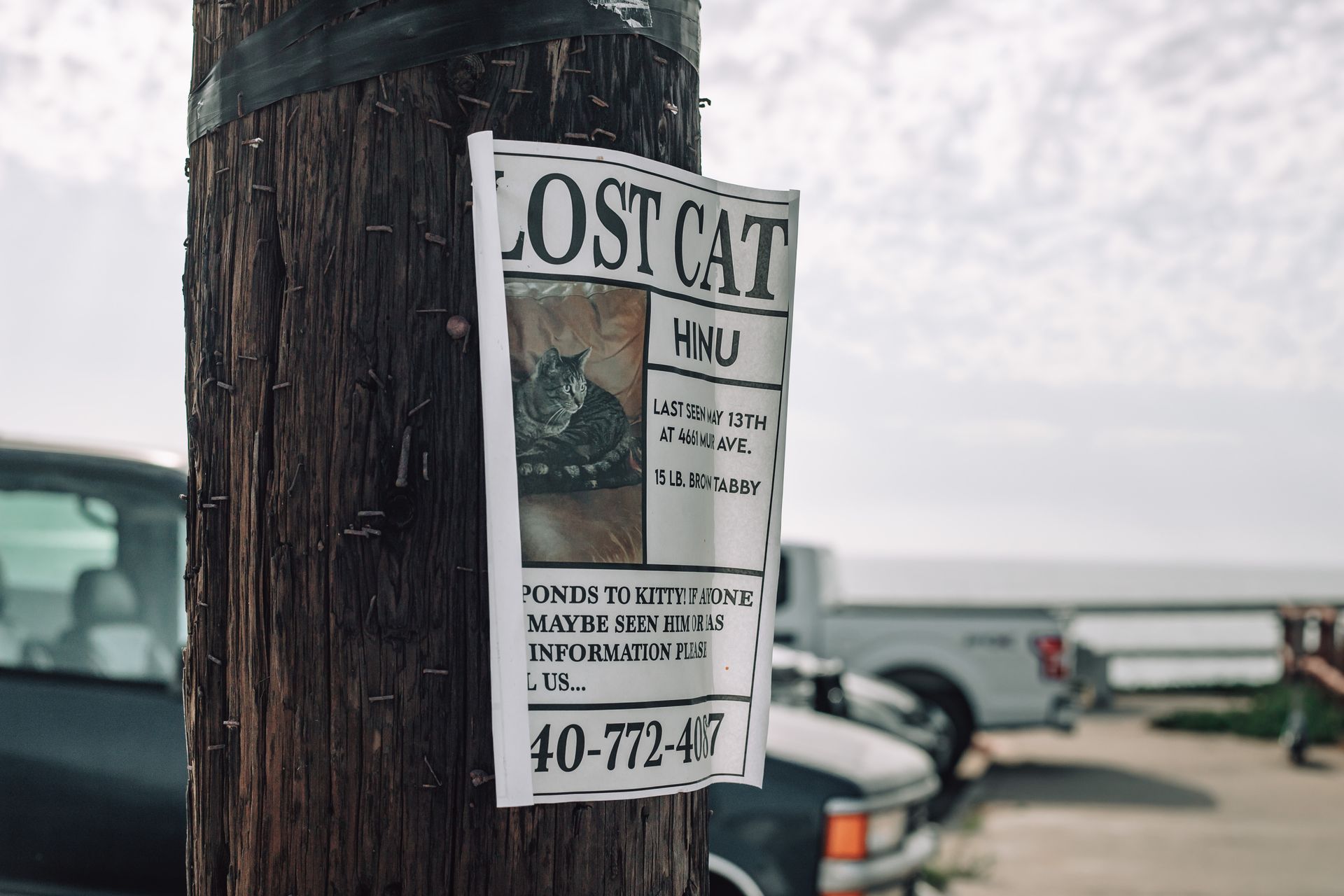
Despite the rise of digital networks, the physical flyer remains one of the most effective recovery tools ever devised—but only if designed correctly. Drivers and pedestrians have only a fraction of a second to absorb your message as they pass by.
Avoid cluttered, text-heavy designs. A highly effective recovery flyer should follow a strict visual hierarchy:
- A Single Headline: Use massive, bold letters reading “LOST DOG” or “LOST CAT” at the very top.
- One Primary Photo: Use a clear, premium, full-body image of your pet standing up. Do not use blurry or heavily filtered photos.
- Minimal Text: State only the breed, color, city, and a vital behavioral warning (e.g., “Timid – Do Not Chase”).
- Direct Contact: Provide your phone number in large, readable numbers.
For those whose daily lives are defined by their quiet, deep-seated devotion to their companions, carrying a symbol of that partnership is a natural instinct. To express your pet-owner pride and join our global network of animal lovers, explore the premium Dog and Cat Graphic Apparel at The Animal Republic, celebrating the companion bond.
-

Robocat T-Shirt
Starts from $23.99 -

Sleepy Cat Hoodie
Starts from $41.99 -

Pug Yoga T-Shirt
Starts from $23.99 -

Fall Dog Hoodie
Starts from $41.99 -

German Shepherd Native Sweatshirt
Starts from $37.99
Preventative Measures for the Future
The best recovery strategy is prevention. Ensure your pet is always equipped with a secure, properly fitted collar with an engraved ID tag, and maintain up-to-date contact registry details linked to their subcutaneous microchip. By combining these modern preventative safeguards with systematic, behavior-based search tactics, you can significantly increase the likelihood of a swift and safe reunion.